May 2026
Ryan's Camino de Santiago
Walking 115 km in 5 days
through northern Spain.
MILES
01234567890123456789.0123456789
walked
DAYS
0123456789
on the trail
TOWNS
0123456789
passed through
CATHEDRAL
0123456789
reached
OVERVIEW
The Last 115 km
The Camino de Santiago is a network of pilgrimage routes across Europe that all end at the Cathedral of Santiago de Compostela in northwest Spain. People have been walking it for over a thousand years.
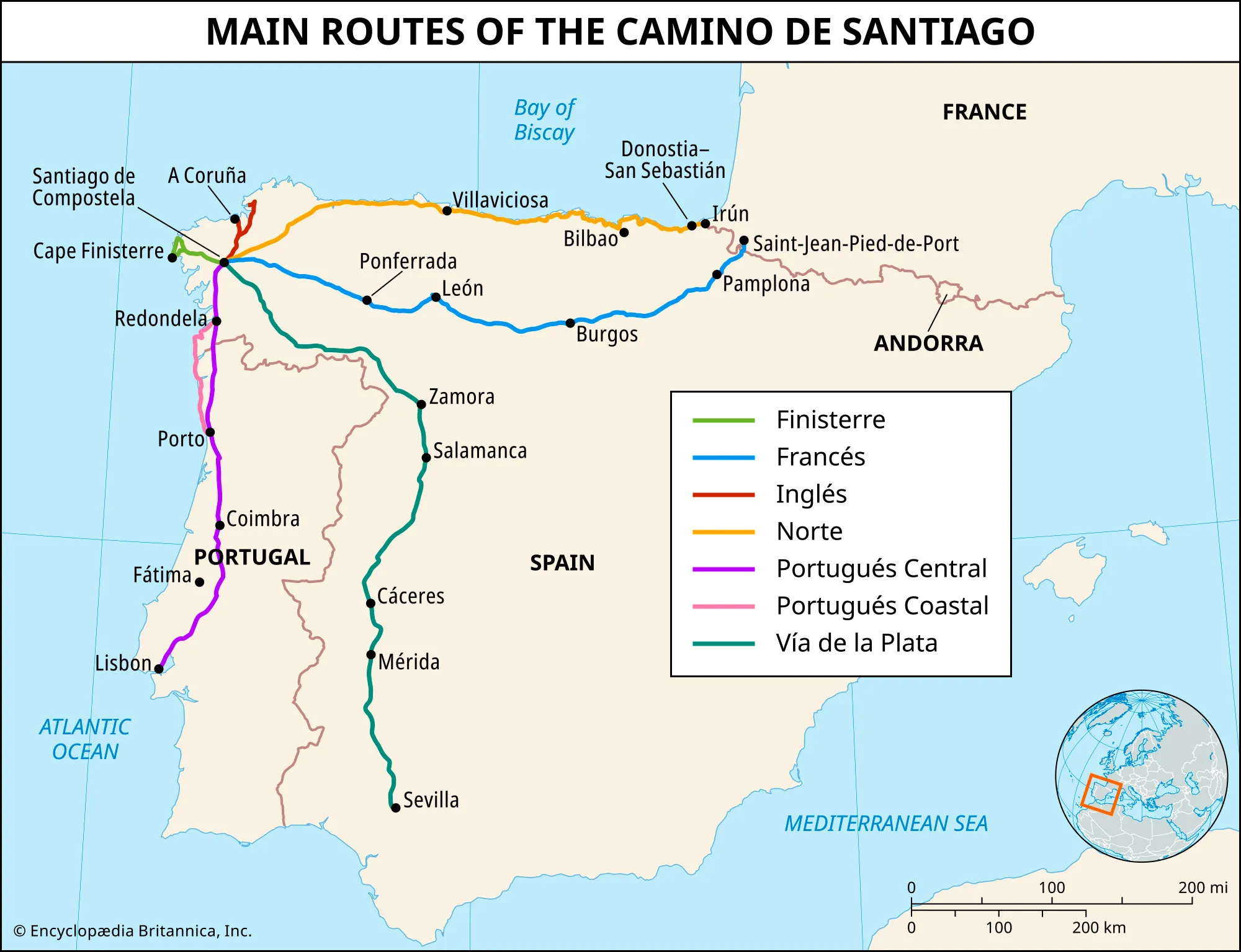
The final stretch of the Camino Francés runs through rural Galicia: eucalyptus forests, stone villages, muddy farm tracks, and the occasional stretch of highway shoulder. The terrain is rolling, not mountainous. The weather is unpredictable.
It's the most walked section of the route. To receive the Compostela — a certificate of pilgrimage dating back to the Middle Ages — you must walk at least 100 km. Most people start in Sarria, the last major town that meets that threshold. I averaged about 14 miles a day, arriving in Santiago on day five.
MILES
01234567890123456789.0123456789
walked
DAYS
0123456789
on the trail
TOWNS
0123456789
passed through
CATHEDRAL
0123456789
reached
OVERVIEW
The Last 115 km
The Camino de Santiago is a network of pilgrimage routes across Europe that all end at the Cathedral of Santiago de Compostela in northwest Spain. People have been walking it for over a thousand years.
The final stretch of the Camino Francés runs through rural Galicia: eucalyptus forests, stone villages, muddy farm tracks, and the occasional stretch of highway shoulder. The terrain is rolling, not mountainous. The weather is unpredictable.
It's the most walked section of the route. To receive the Compostela — a certificate of pilgrimage dating back to the Middle Ages — you must walk at least 100 km. Most people start in Sarria, the last major town that meets that threshold. I averaged about 14 miles a day, arriving in Santiago on day five.